How to Make Nasi Lemak
Nasi lemak is Malaysia's best-loved breakfast: rice cooked in coconut milk and pandan, served with a spicy-sweet sambal, crispy anchovies and peanuts, egg and cucumber. This tutorial walks you through making a classic plate from scratch.
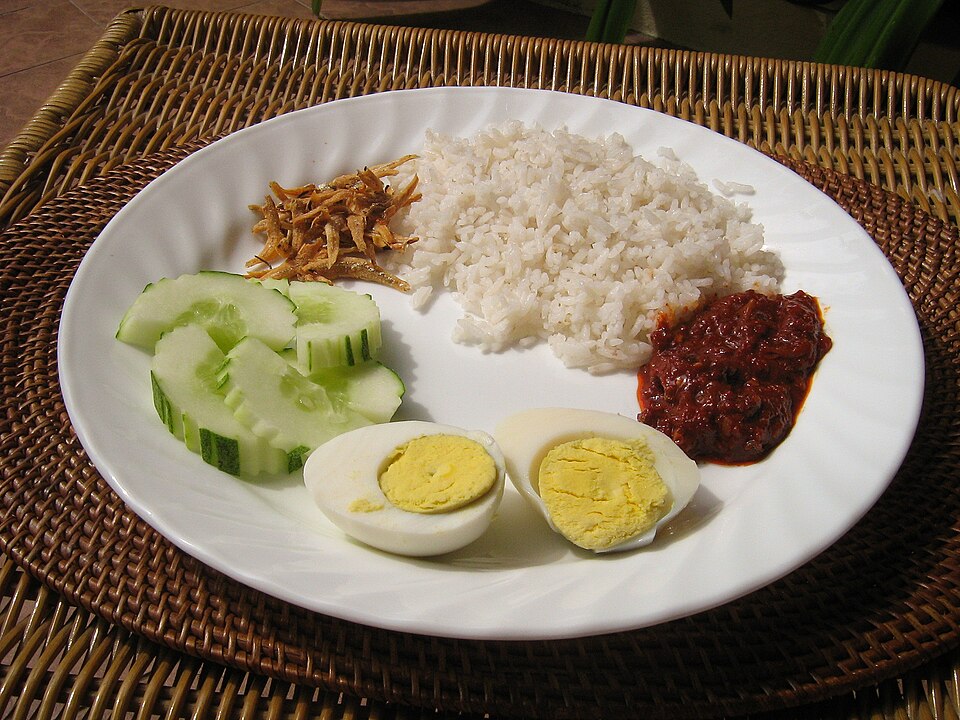
A basic plate of nasi lemak. Photo: Craig, CC BY 3.0 (see Photo credits).
Serves: 4
Time: about 1 hour 15 minutes
By the end you will have:
- Fragrant coconut rice
- Sambal ikan bilis (anchovy sambal)
- Crispy fried anchovies and peanuts
- Hard-boiled eggs and cucumber to finish the plate
Ingredients
Coconut rice
- 2 cups jasmine or long-grain rice
- 1 cup thick coconut milk
- 1 cup water
- 2 pandan leaves, tied into a knot
- 2 thin slices of ginger (optional)
- ½ tsp salt
Sambal ikan bilis
- 15 dried chillies, deseeded and soaked in hot water for 15 minutes
- 5 shallots
- 3 cloves garlic
- 1 tsp belacan (shrimp paste), toasted
- 1 large onion, sliced into rings
- 1 tbsp tamarind paste, mixed with ¼ cup warm water and strained
- 1–2 tbsp palm sugar or brown sugar
- ½ tsp salt, or to taste
- ½ cup cooking oil
- A handful of dried anchovies (ikan bilis), about 30 g, rinsed and dried
To serve
- 100 g dried anchovies (ikan bilis), rinsed and dried
- ½ cup raw peanuts
- 4 eggs
- 1 cucumber, sliced
- Oil for frying
Dried chillies, belacan, tamarind paste and palm sugar are sold in most Asian grocery stores and in the international aisle of larger supermarkets.
Step 1: Cook the coconut rice
- Rinse the rice in a few changes of water until the water runs mostly clear. Drain well.
- Put the rice in a rice cooker or pot. Add the coconut milk, water, salt, ginger and knotted pandan leaves.
- Stir once so the salt and coconut milk are evenly mixed.
- Cook in the rice cooker, or in a pot on low heat with the lid on for about 15–20 minutes, until the liquid is absorbed.
- Let the rice rest, covered, for 10 minutes. Remove the pandan and ginger, then fluff with a fork.
Coconut milk can catch on the bottom of a pot. Keep the heat low and don't lift the lid while the rice cooks.
Step 2: Make the sambal
- Drain the soaked chillies. Blend them with the shallots, garlic and toasted belacan into a smooth paste, adding a splash of water if needed.
- Heat the oil in a pan over medium heat. Fry the anchovies for the sambal until crisp, then lift them out and set them aside.
- In the same oil, add the blended paste. Cook over medium-low heat for 10–15 minutes, stirring often, until the oil separates and rises to the surface and the paste smells cooked rather than raw.
- Add the sliced onion and cook for 2–3 minutes until softened.
- Stir in the tamarind water, sugar and salt. Simmer for 5 minutes, then taste and adjust: more sugar for sweetness, more tamarind for tang, more salt for depth.
- Return the fried anchovies to the sambal and stir through.
Don't rush the paste. Sambal that isn't cooked until the oil separates tastes sharp and raw.
Step 3: Fry the anchovies and peanuts
- Heat about 1 cm of oil in a pan over medium heat.
- Fry the 100 g of anchovies in small batches for 1–2 minutes until golden and crisp. Drain on paper towels.
- Fry the peanuts in the same oil, stirring constantly, until golden. Drain and let cool; they keep crisping as they cool.
Step 4: Prepare the eggs and cucumber
- Place the eggs in a pot, cover with cold water and bring to a boil.
- Turn off the heat, cover, and leave for 10 minutes for hard-boiled eggs.
- Cool in cold water, peel, and halve.
- Slice the cucumber.
You can also fry the eggs (sunny-side up or with crispy edges) instead of boiling them.
Step 5: Assemble the plate
Scoop a mound of coconut rice onto each plate. Add a generous spoonful of sambal, then arrange the crispy anchovies, peanuts, egg and cucumber around it.
Variations
- Add a protein. Serve with fried chicken (ayam goreng berempah), beef rendang or fried fish.
- Wrap it up. For a takeaway version, pack the rice and sides in banana leaf and paper.
- Vegetarian. Leave out the anchovies and belacan, and add more peanuts and a dash of soy sauce to the sambal for depth.
- Spice level. For a milder sambal, use fewer dried chillies or deseed them thoroughly.
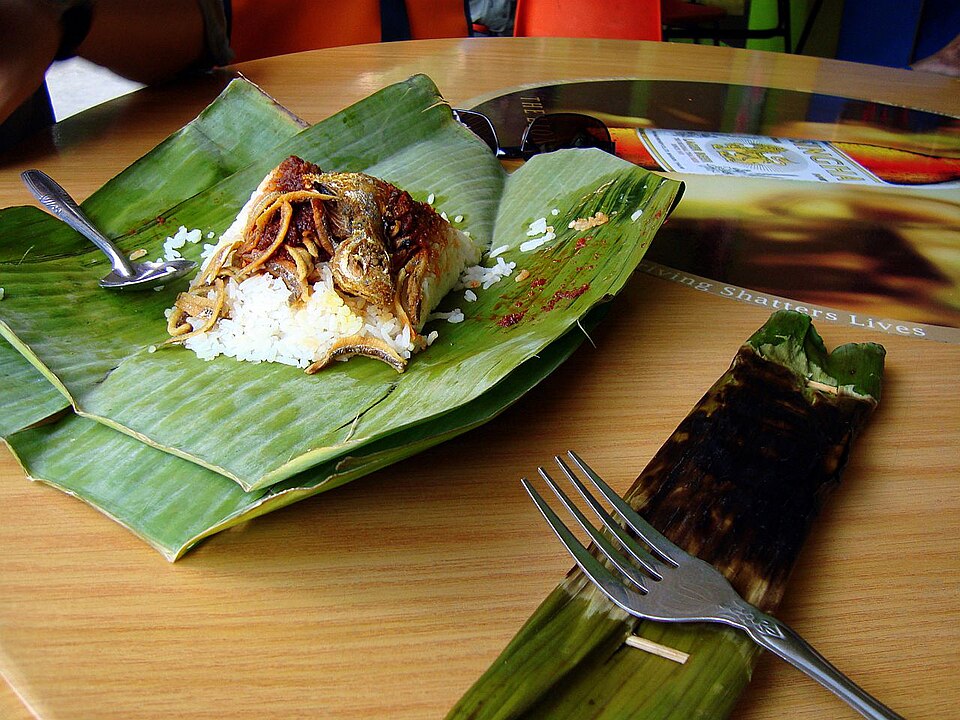
Nasi lemak is traditionally wrapped in banana leaf. Photo: Takeaway, CC BY-SA 3.0.
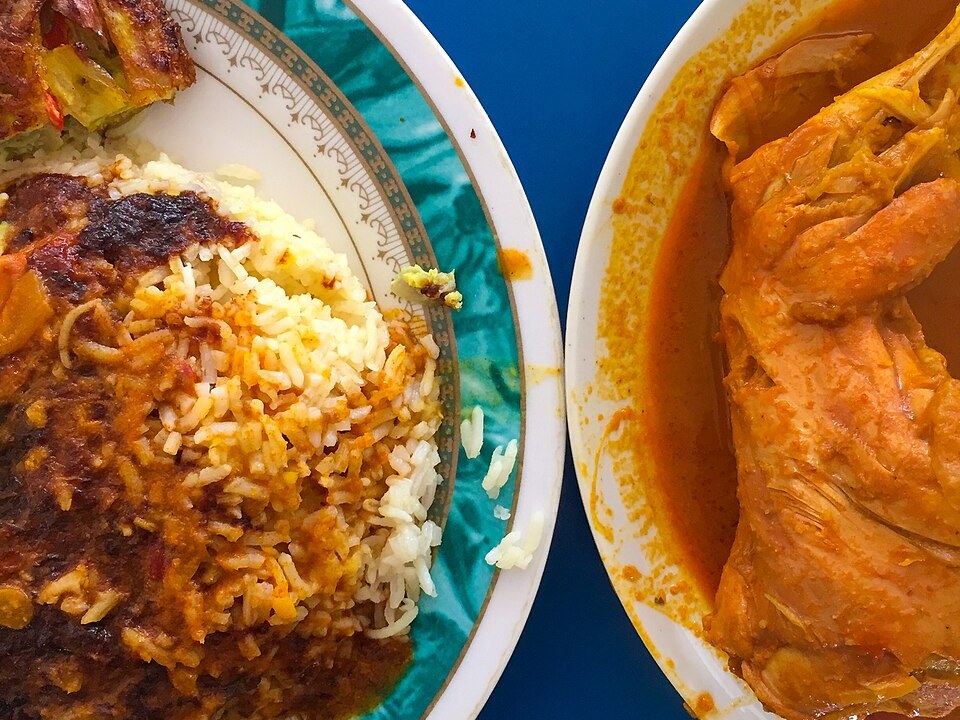
A northern-style plate, served with chicken curry. Photo: Kutubkhanah, CC BY-SA 4.0.
Storing and reheating
- Keep the rice, sambal and sides in separate containers in the fridge for up to 2 days.
- Reheat the rice with a splash of water until steaming hot.
- Keep the anchovies and peanuts in an airtight container at room temperature so they stay crisp.
Next steps
- Make the sambal in a double batch. It freezes well in small portions.
- Try pairing nasi lemak with a cup of teh tarik for the full Malaysian breakfast.
Photo credits
The photos on this page come from Wikimedia Commons. They are resized to 960 pixels wide, and the northern-style photo is cropped to a landscape shape.
- Basic plate: Nasi lemak basic.jpg by Craig, licensed under CC BY 3.0.
- Banana leaf: Nasi lemak 01a.jpg by Takeaway, licensed under CC BY-SA 3.0.
- Northern style: Nasi Lemak Utara.jpg by Kutubkhanah, licensed under CC BY-SA 4.0.